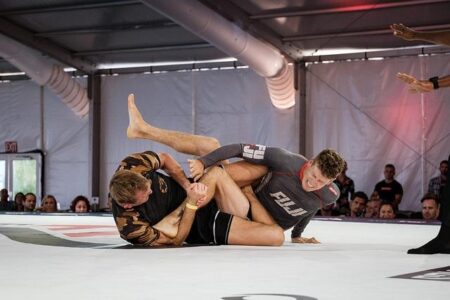



At PFL San Diego, Abraham Bably revealed that his recent decision to move up to the 205-pound division was heavily influenced by none other than boxing legend Mike Tyson. The rising mixed martial artist cited Tyson’s fearless approach and ability to thrive in a heavier weight class as key inspirations behind his strategic shift. As Bably prepares to face new challenges in the light heavyweight category, his move signals a bold step forward in his career-and one that promises to capture the attention of fight fans worldwide.
PFL San Diego Spotlight Abraham Bably’s Strategic Shift to Light Heavyweight Inspired by Mike Tyson’s Aggressive Style
Abraham Bably’s decision to ascend to the light heavyweight division has garnered significant attention ahead of PFL San Diego. Drawing inspiration from the legendary Mike Tyson, Bably aims to embody the aggressive, high-pressure style that made Tyson an iconic force in boxing. This strategic shift is not merely about weight class but a whole new approach to his fighting philosophy, focusing on explosive power and relentless offense. Bably’s camp believes that harnessing Tyson’s intensity will give him a distinct edge against established 205lbs contenders.
Highlighting the fighter’s transition, the move comes with tailored adjustments both in training and strategy:
- Explosive Combination Drills: Emphasizing quick, multi-strike sequences reminiscent of Tyson’s blitz attacks.
- Footwork Refinement: Enhancing lateral movement to trap opponents in corners.
- Strength & Conditioning: Building the requisite power to compete physically in the heavier division.
| Aspect | Previous Division (Middleweight) | New Division (Light Heavyweight) |
|---|---|---|
| Fighting Style | Calculated Strikes | Aggressive Pressure |
| Average Fight Pace | Moderate | Fast & Relentless |
| Training Focus | Precision & Defense | Power & Volume |
Analyzing the Potential Impact of Bably’s Move to 205 Pounds on His Career and Recommendations for Maximizing Success
Abraham Bably’s decision to move up to the light heavyweight division at 205 pounds signals a bold strategic shift, reminiscent of Mike Tyson’s explosive moves to dominate different weight classes. This transition comes with the promise of enhanced power and reach, potentially allowing Bably to leverage his physicality against a new set of opponents. However, the increased weight class also presents challenges such as adapting to faster, stronger adversaries and maintaining cardio efficiency throughout bouts. Success at this level demands meticulous conditioning and technical adjustments to avoid being outpaced or outmuscled in the octagon.
Key considerations for maximizing success:
- Strength and conditioning: Tailored programs focusing on muscle gain without sacrificing speed and agility.
- Technical versatility: Expanding striking and grappling tools to counter varied fighting styles prevalent at 205lbs.
- Recovery optimization: Enhanced nutrition and rest protocols to withstand the rigors of tougher competition.
| Aspect | Potential Impact | Recommended Focus |
|---|---|---|
| Power | Higher striking impact | Explosive strength training |
| Speed | Risk of slight decrease | Speed drills, agility work |
| Endurance | Increased cardiovascular demand | High-intensity interval training |
| Technique | Need for adaptation | Diverse skillset development |
In Summary
As Abraham Bably continues to carve out his path in the PFL, his decision to move up to the 205-pound division, inspired by the legendary Mike Tyson’s fearlessness and adaptability, marks a pivotal moment in his career. Fans and analysts alike will be watching closely to see how this strategic shift impacts his performance in the highly competitive light heavyweight landscape. With the stakes higher than ever at PFL San Diego, Bably’s journey embodies the blend of ambition and homage that often defines the sport’s most compelling stories.


![++[LIVESTREAMS]TV!!PFL Chicago: Carmouche vs Bishop 2 Live Streaming MMA Free Online 2026 – Universidad de Córdoba (UCO)](https://mma-news.info/wp-content/uploads/2026/10/46240-livestreamstvpfl-chicago-carmouche-vs-bishop-2-live-streaming-mma-free-online-2026-universidad-de-cordoba-uco-450x300.jpg "++[LIVESTREAMS]TV!!PFL Chicago: Carmouche vs Bishop 2 Live Streaming MMA Free Online 2026 – Universidad de Córdoba (UCO)")