


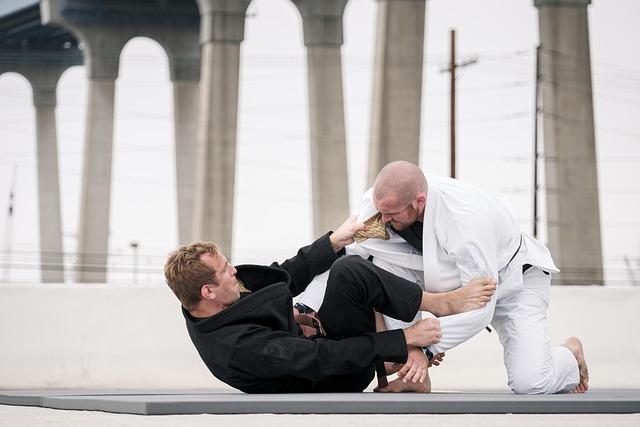
As the dust settles on a groundbreaking year in mixed martial arts, fans and analysts alike are reflecting on the most electrifying moments that shaped MMA in 2025. Among these highlights, one moment stands out above the rest-the Submission of the Year. Showcasing unparalleled skill, technique, and composure, this submission not only sealed a fight but also left a lasting impact on the sport. In this year-end review, we delve into the fight, the fighter, and the significance of MMA’s most memorable tap-out of 2025.
Submission Techniques That Defined MMA in 2025 Breaking Down the Most Innovative Finishes and Fighter Strategies
In 2025, submission techniques evolved beyond traditional grappling fundamentals, combining explosive agility with precision timing to create finish opportunities that left audiences and opponents alike in awe. Fighters consistently leveraged dynamic transitions, utilizing unexpected angles to set traps that exploited minute openings. This year saw a surge in hybrid maneuvers blending jiu-jitsu with elements of catch wrestling and judo-arming athletes with multiple layers of control and submission threats simultaneously. Noteworthy among these innovations was the rise of the “spiral armbar”, a technique that utilizes rotational torque in combination with a sweeping leg entanglement, making escapes near impossible and often resulting in lightning-fast taps.
- Chain submissions: Fighters linked multiple submission attempts fluidly, forcing opponents into an endless defense loop.
- Pressure passing setups: Heavy top control was used not just for dominance but as a setup to isolate limbs for joint locks.
- Guard innovation: The “reverse De La Riva” guard emerged as a launchpad for heel hooks and toe holds.
To illustrate the impact of these techniques on fight outcomes, consider the submission finish rate comparison below, showing how innovation correlated with higher finish percentages over past years:
| Year | Finishes by Submission | Innovative Techniques Introduced |
|---|---|---|
| 2023 | 28% | 2 |
| 2024 | 33% | 4 |
| 2025 | 42% | 7 |
Expert Analysis Reveals Key Lessons from MMA 2025 Submissions How Fighters Can Adapt and Improve for the Upcoming Season
The surge in grappling innovations throughout MMA 2025 has underscored the evolving complexity of submission techniques. Fighters who demonstrated adaptability by integrating compound movements and dynamic transitions consistently outpaced their competition. Notably, top-tier athletes capitalized on layered control positions, enabling them to maintain dominance while setting up submissions with higher success rates. This strategic shift highlights the growing necessity for practitioners to diversify their ground game beyond traditional methodology.
To stay competitive, fighters must focus on several key areas:
- Positional fluidity: Seamlessly shifting between control and attack phases without losing leverage.
- Grip innovation: Employing unconventional grips to limit opponent defense and create unique submission angles.
- Defensive anticipation: Recognizing and countering emerging submission setups before fully committed.
| Submission Type | Success Rate (%) | Notable Usage | ||||||||||
|---|---|---|---|---|---|---|---|---|---|---|---|---|
| Heel Hook Variations | 38 | Mid-to-late rounds | ||||||||||
| RNC with Modified Grips | 44 | Aggressive starters | ||||||||||
| Dynamic Arm Triangles | 29 | The surge in grappling innovations throughout MMA 2025 has underscored the evolving complexity of submission techniques. Fighters who demonstrated adaptability by integrating compound movements and dynamic transitions consistently outpaced their competition. Notably, top-tier athletes capitalized on layered control positions, enabling them to maintain dominance while setting up submissions with higher success rates. This strategic shift highlights the growing necessity for practitioners to diversify their ground game beyond traditional methodology. To stay competitive, fighters must focus on several key areas:
|