

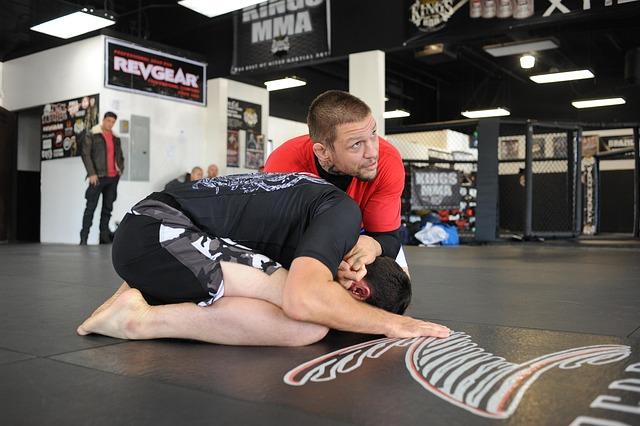
The triangle choke, once a cornerstone submission in mixed martial arts, appears to be fading from the sport’s competitive landscape. Once a staple move for fighters across all weight classes, the technique’s presence in recent MMA bouts has notably diminished. This decline raises questions about the evolution of grappling strategies and whether the triangle choke, a fundamental in Brazilian Jiu-Jitsu and MMA alike, is becoming a relic of the past. In this article, we explore the factors behind the disappearance of one of MMA’s most basic yet effective submissions and what it means for the future of the sport.
The Vanishing Triangle Choke Exploring Causes Behind Its Decline in Modern MMA
The triangle choke, once a staple submission showcased in countless highlight reels, has noticeably faded from the spotlight in contemporary MMA bouts. This decline can be attributed to several intertwined factors, chief among them being the evolution of defensive strategies. Fighters today enter the cage with comprehensive grappling knowledge, often drilling escapes against the very maneuvers that once caught opponents off guard. Additionally, the modern training environment emphasizes wrestling dominance and ground-and-pound control, leaving less opportunity for the setup of precise submission holds like the triangle.
Contributing to the vanishing triangle choke:
- Advanced neck and arm positioning awareness
- Improved posture control to avoid leg entrapment
- Faster transitions by opponents to neutralize threats
- Preference for high-percentage submissions in MMA scoring
| Era | Triangle Attempts per Event | Success Rate |
|---|---|---|
| Early 2000s | 12 | 45% |
| 2010s | 7 | 30% |
| 2020s | 3 | 15% |
Reviving the Classic Submission Strategies for Fighters and Coaches to Reinstate the Triangle in Competition
Once a cornerstone of MMA grappling arsenals, the triangle choke has witnessed a surprising decline in competitive applications. Fighters and coaches are increasingly favoring more dynamic or less risk-prone submissions, inadvertently sidelining this classic technique. The triangle, with its deceptively simple mechanics and devastating effectiveness when executed correctly, remains a potent weapon that demands precise control and timing. However, evolving strategies, athletic grapplers’ emphasis on striking, and the higher level of defensive awareness have contributed to its diminished presence inside the cage.
To reinstate the triangle choke’s prominence, teams are revisiting foundational drills and strategic setups that have proved successful in the past. Emphasizing fluid transitions and creating angles for tighter locks, coaches are encouraging fighters to incorporate specific positional frames that maximize submission opportunities. Key focus areas include:
- Establishing robust guard control to isolate arms and limit opponent’s movement.
- Developing seamless ties to sweeps that force opponents off balance.
- Integrating the triangle setup with striking chains to create openings and deceive adversaries.
| Technique Element | Coach Guidance | Fighter Focus |
|---|---|---|
| Leg Positioning | Maintain tight angles and leg locks | Flex hips, control opponent’s posture |
| Arm Isolation | Use hand-fighting to trap arms | Quick adjustments and patience |
| Transition Drills | Combine with sweep drills | Timing and fluid motion |
Key Takeaways
As the landscape of mixed martial arts continues to evolve, the fading presence of the traditional triangle choke serves as a poignant reminder of how even the most fundamental techniques can fall out of favor amid shifting strategies and athlete skill sets. Whether the triangle submission will ever reclaim its former prominence remains uncertain, but its disappearance undeniably marks a significant chapter in MMA’s ongoing tactical transformation. For fighters, coaches, and fans alike, understanding this evolution offers valuable insight into the sport’s past-and the myriad directions it may take moving forward.