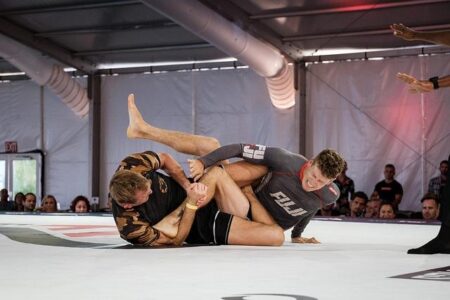



In the lead-up to their much-anticipated UFC clash in Qatar, Aljamain Sterling has zeroed in on his opponent Kevin Vallejos’ physical stature, sparking interest and debate within the MMA community. The bantamweight contender did not shy away from commenting on Vallejos’ size, dubbing him the “smaller guy” as part of his strategic mindset heading into the showdown. As fight night approaches, Sterling’s remarks have added a new layer of intrigue to the bout, highlighting the often-overlooked role that size and reach play in the fast-evolving world of mixed martial arts.
Aljamain Sterling Challenges Kevin Vallejos on Physical Advantage Ahead of UFC Qatar Clash
Aljamain Sterling has publicly questioned the physical attributes of his upcoming opponent, Kevin Vallejos, ahead of their highly anticipated UFC clash in Qatar. Sterling, known for his strategic wrestling and sharp fight IQ, expressed concerns about dealing with Vallejos’ size and reach advantages. Highlighting past experiences where physicality played a pivotal role, Sterling suggested that the matchup may tilt in favor of Vallejos if the size discrepancy isn’t addressed in the Octagon.
Despite the size debate, Sterling remains confident in his preparation and skill set. He outlined key areas that could neutralize any perceived physical edge, including:
- Wrestling dominance to control grappling exchanges.
- Speed and agility to outmaneuver the opponent’s reach.
- Cardio endurance to maintain pressure throughout the rounds.
| Fighter | Height | Reach | Last 5 Fights |
|---|---|---|---|
| Aljamain Sterling | 5’7″ | 71″ | 4W – 1L |
| Kevin Vallejos | 5’9″ | 74″ | 3W – 2L |
Analyzing the Impact of Size Discrepancies in MMA and Strategic Preparation Tips for Fighters
In mixed martial arts, size mismatches often create a psychological and tactical edge that fighters must meticulously address. When a competitor is notably smaller, challenges arise beyond sheer power disparities-reach, leverage, and weight distribution all factor significantly into strategy. Aljamain Sterling’s comments about Kevin Vallejos’ size underscore the complex dynamics at play inside the Octagon. Fighters facing larger opponents must maximize speed, agility, and precision to circumvent brute strength. Conditioning becomes paramount, allowing the smaller athlete to maintain high output and capitalize on endurance advantages as a fight progresses.
To effectively prepare for size discrepancies, fighters and their teams commonly emphasize the following tactical approaches:
- Closing Distance Quickly: Bridging reach gaps to initiate clinches and neutralize striking range.
- Leveraging Jiu-Jitsu and Grappling: Utilizing superior technique to offset physical disadvantages in ground exchanges.
- Targeting Vulnerabilities: Focusing strikes on less protected areas, exploiting slower reactions from larger opponents.
- Implementing Feints and Angles: Creating unpredictability to open striking lanes and defensive openings.
| Size Factor | Strategic Adaptation |
|---|---|
| Reach Disadvantage | Close distance aggressively with head movement |
| Weight Differential | Use cardio to outlast and wear down opponent |
| Power Gap | Prioritize precision striking and counters |
| Size Pressure | Employ grappling to control positioning |
Concluding Remarks
As the UFC Qatar event approaches, the size and style match-up between Aljamain Sterling and Kevin Vallejos has certainly added an intriguing subplot to the card. Sterling’s outspoken remarks about Vallejos’ stature underscore the psychological warfare that often accompanies high-stakes bouts. Fans will be watching closely to see whether Sterling’s size advantage translates into a decisive edge inside the Octagon or if Vallejos can prove that skill and strategy outweigh physical dimensions. Regardless of the outcome, this showdown promises to deliver compelling action and further fuel discussions about the role of size in MMA competition.