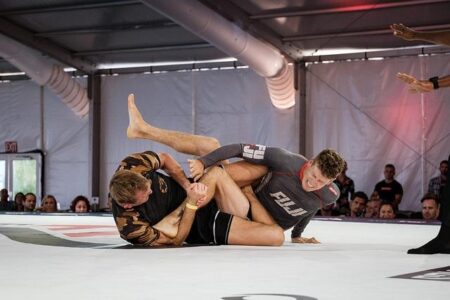



The payout details from PFL San Diego have been officially disclosed, shedding light on the financial rewards for fighters at the recent event. Headlining the card, A.J. McKee secured a substantial payday of $100,000, while his opponent took home a considerably smaller sum of $10,000. This stark contrast in earnings underscores the payout structure within the Professional Fighters League and offers insight into the economics of MMA competitions.
PFL San Diego Payouts Expose Significant Pay Disparity Between Headliner and Opponent
The recently disclosed payout figures from PFL San Diego have sparked conversations about the striking financial gap between headlining fighters and their undercard counterparts. A.J. McKee, the event’s star attraction, earned a hefty $100,000, while his opponent managed to secure only $10,000 for stepping into the cage. This tenfold difference highlights how fighter compensation remains heavily skewed in favor of marquee names, leaving lesser-known fighters struggling for equitable earnings despite similar risks and efforts.
Below is a quick overview of the payout distribution from the event, illustrating the disparity across a few matchups:
| Fighter | Payout | Opponent | Payout |
|---|---|---|---|
| A.J. McKee | $100,000 | Patricia Silva | $10,000 |
| Rob Wilkinson | $50,000 | Will Fleury | $12,000 |
| Kayla Harrison | $105,000 | Martina Jindrova | $15,000 |
- Top-tier fighters continue to command substantial base pay and win bonuses.
- Newcomers and undercards often receive minimal guarantee money, leading to potential financial instability.
- Calls for better fighter pay are intensifying, with fans and industry peers advocating for a more balanced payout structure.
Analyzing Fighter Compensation Structures Current Trends and Recommendations for Fairer MMA Pay Distribution
Recent disclosures from the PFL San Diego event have spotlighted stark disparities in fighter pay, igniting conversations around fairness in MMA compensation. A.J. McKee’s reported $100,000 payout dwarfs his opponent’s $10,000 earning, underlining the sport’s ongoing challenges with equitable distribution of revenue. This imbalance is not just a one-off; it reflects a broader trend where star power and name recognition heavily influence purse sizes, often leaving lesser-known fighters with limited earnings despite risking their health and livelihoods in the cage.
Experts suggest several structural changes to address this inequality, including:
- Implementing minimum base pays to ensure all fighters earn living wages regardless of their ranking.
- Performance-based bonuses tied not only to wins but also to fight excitement and engagement.
- Revenue sharing models allowing fighters a stake in event profits similar to other professional sports.
Below is a simplified comparison of current payout scales, illustrating the gap between headline fighters and undercards:
| Fighter | Reported Payout | Fight Position |
|---|---|---|
| A.J. McKee | $100,000 | Main Event |
| Opponent | $10,000 | Main Event |
| Undercard Fighter A | $8,000 | Prelims |
| Undercard Fighter B | $5,000 | Prelims |
Concluding Remarks
As the PFL continues to grow in prominence within the MMA landscape, the recent payout figures from the San Diego event highlight the significant financial disparities often present in the sport. With A.J. McKee securing a hefty $100,000 payday compared to his opponent’s $10,000, the figures underscore both the rewards of top-tier performance and the ongoing conversation about fighter compensation. Fans and analysts alike will be watching closely as the league moves forward, balancing competitive action with the business realities of mixed martial arts.


![++[LIVESTREAMS]TV!!PFL Chicago: Carmouche vs Bishop 2 Live Streaming MMA Free Online 2026 – Universidad de Córdoba (UCO)](https://mma-news.info/wp-content/uploads/2026/10/46240-livestreamstvpfl-chicago-carmouche-vs-bishop-2-live-streaming-mma-free-online-2026-universidad-de-cordoba-uco-450x300.jpg "++[LIVESTREAMS]TV!!PFL Chicago: Carmouche vs Bishop 2 Live Streaming MMA Free Online 2026 – Universidad de Córdoba (UCO)")